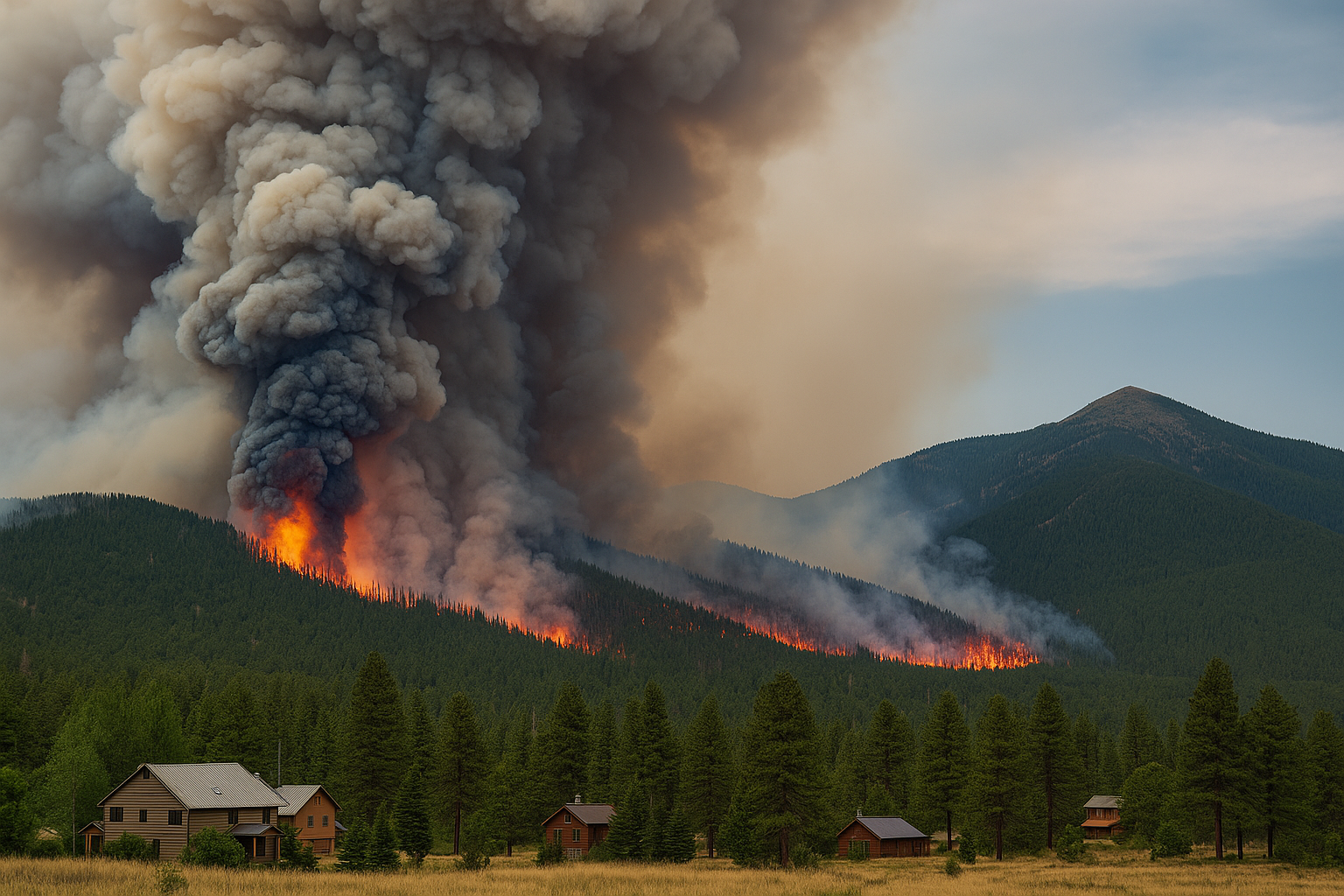
The scent of pine and the crackle of dry needles remind us that beauty and risk live side by side in Pinehaven. In recent years, devastating events such as the 2018 Spring Creek Fire (Colorado’s second-largest wildfire at the time) burned over 108,000 acres and destroyed more than 140 structures in Huerfano and Costilla counties, coming dangerously close to communities such as Pinehaven and Cuchara. (1)
The Firewise USA® recognition program, led by the NFPA, helps communities organize, plan, and take collective action to reduce wildfire risks. Think of it as a “neighborhood watch” for nature with less binoculars, more rakes and gloves. The NFPA, a nonprofit organization that develops national fire-safety codes and standards, recognizes the unique challenges faced by communities in wildfire-prone regions and provides a structured framework for residents to work together toward prevention and preparedness. (3)
-
Organize. The community forms a small volunteer committee (including residents and partners like the local fire department) to lead the effort and serve as the point of contact with the state Firewise liaison. This group defines the site’s boundaries (from as few as 8 homes up to 2,500) and serves as the liaison with state officials. Steve Johnson is currently Pinehaven’s Firewise coordinator and can be reached at digitalelintsys@gmail.com
- Plan. With guidance from wildfire experts (e.g., the Colorado State Forest Service or local fire officials), the committee conducts a wildfire risk assessment, updated at least every five years, and develops a three-year action plan outlining projects and education efforts to reduce hazards.
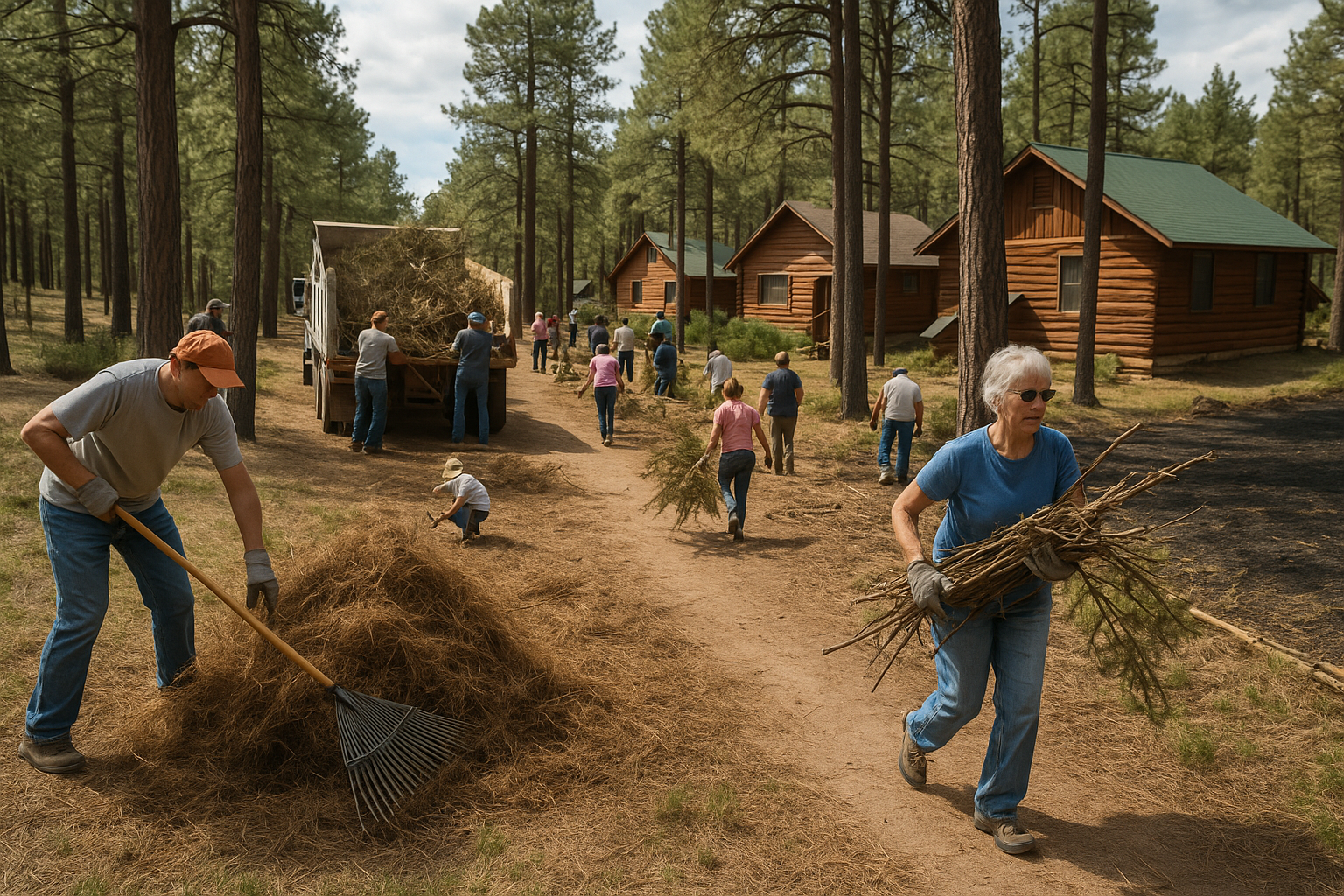
- Do. The committee mobilizes residents to carry out the mitigation projects and educational activities identified in the plan. Each year, the community must invest a minimum of one volunteer hour per cabin. That’s just sixty minutes a year and less time than it takes to watch a Broncos game, but it could help save your cabin. This could include clearing brush, thinning trees, improving defensible space, or hosting a “Firewise Day” event to raise awareness. These efforts count toward the site’s annual Firewise reporting.
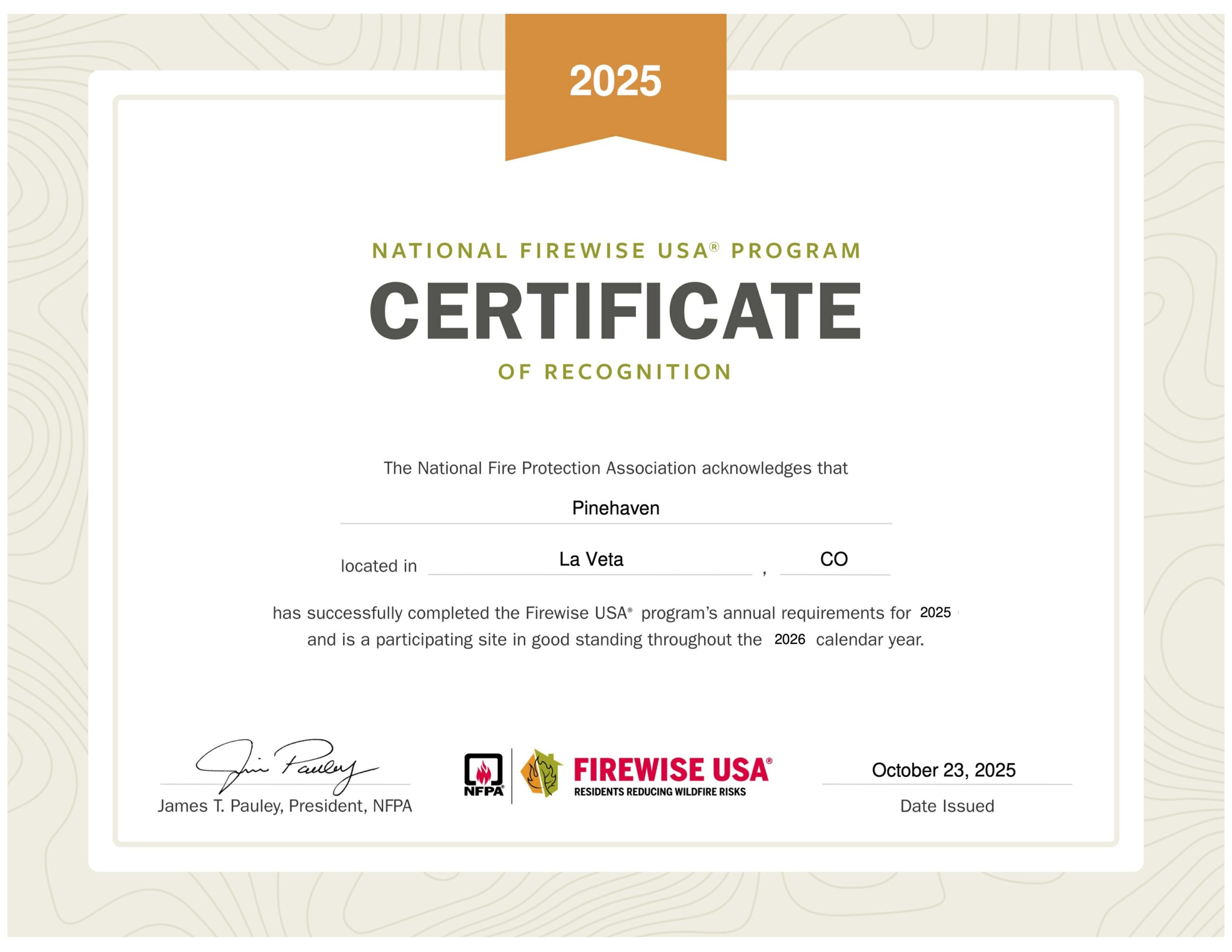
- Apply. Once the above criteria are met initially, the committee submits an annual application through the NFPA’s Firewise USA® portal, documenting the assessment, action plan, and work completed. Upon approval, the community is officially recognized and awarded a Certificate of Recognition. Firewise recognition is all-or-nothing: a community is either an active recognized Firewise USA® site in good standing or it is not. There are no tiered levels such as gold or silver.
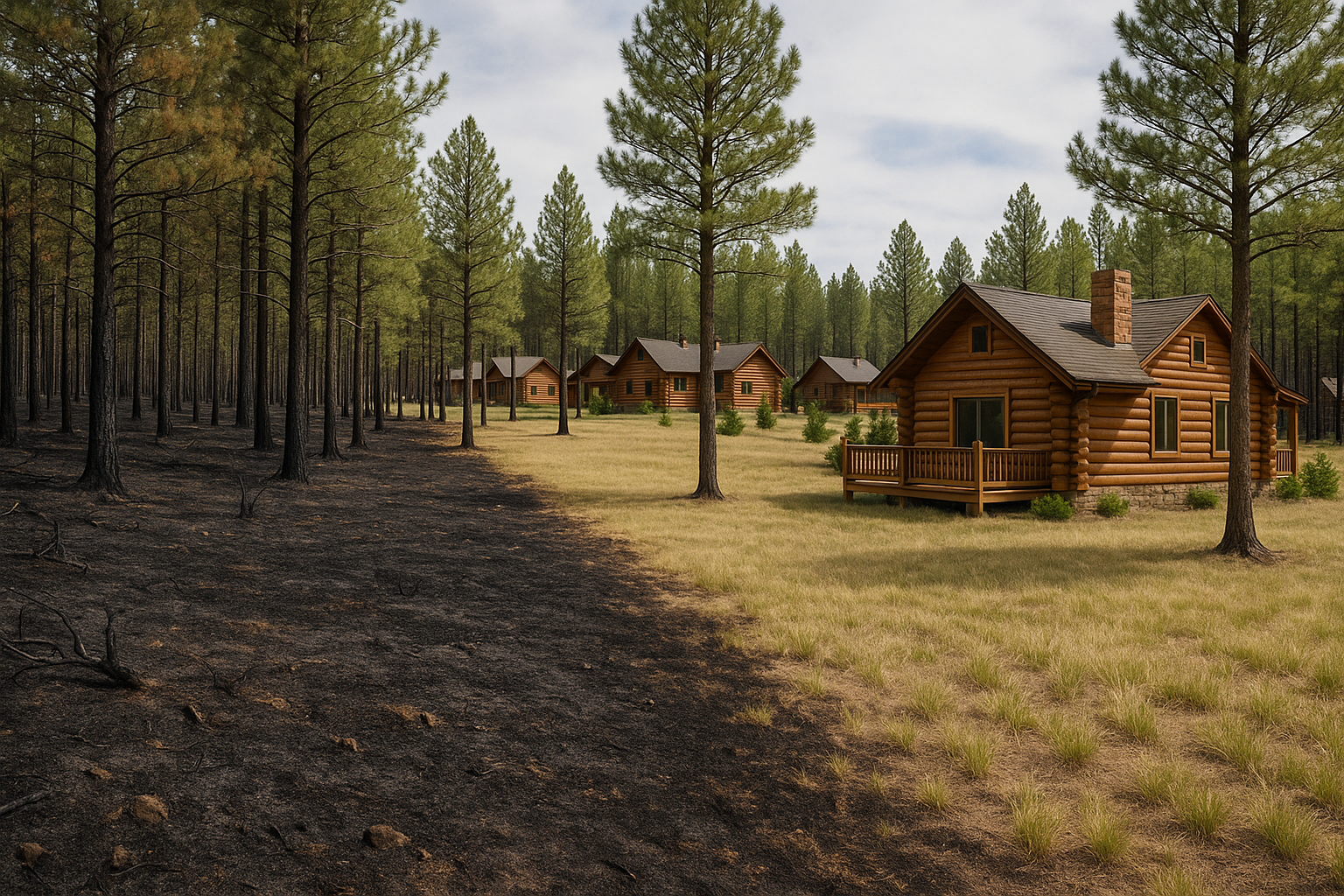
Every Pinehaven cabin owner plays a vital role in reducing wildfire risk. Here’s your “cabin owner’s workout plan”, a few small moves that make a big difference.
- Clear forest debris at your cabin. Regularly remove pine needles and debris from your roof, gutters, decks, and the ground near your cabin to prevent embers from igniting them.
- Create a 5-foot noncombustible zone. Replace wood mulch or dry plants next to your cabin with gravel, rock, or bare soil to keep fire from starting at your walls.
- Prune trees and thin vegetation. Trim overhanging branches and dead limbs, raise lower limbs, and thin the oak brush to prevent fire from climbing into the tree canopy.
- Relocate combustibles. Keep firewood, propane tanks, and other flammable materials at least 30 feet from your cabin and never under decks.
- Take advantage of Pinehaven’s biannual debris haul-off. Pinehaven’s biannual free pickup collects pine needles and small debris twice a year to reduce wildfire risk and support the community’s Firewise safety efforts. The biannual haul-off is like spring cleaning with a community twist of less clutter, fewer sparks, and a safer forest for everyone. You can read more about this in Journal 27. (6)